
Raven vs Crow vs Blackbird – Common Identifiers!
By Kelly Miller, Updated , 4 min read
You probably see black birds every day. But are those black birds… blackbirds?
Most of the black-colored birds you see on a daily basis in North America do not actually have “blackbird” in their names.
Instead, the big ones are usually vultures, the medium-sized ones are most often crows, and the smaller ones are likely to be starlings or cowbirds.
Telling apart different species of black-colored birds is a challenge for birdwatchers of all experience levels. However, each species has a few defining traits.
In this bird identification guide, we’ll review the basics of recognizing ravens, crows, and other common black-colored birds.
Telling Apart Different Black-Colored Birds
Here’s a closer look at common black-colored birds, listed by size. The distinguishing traits described in the right-hand column can be used to tell one species from another.
| Black-Colored Bird | Average Adult Length | Distinguishing Traits |
Common Raven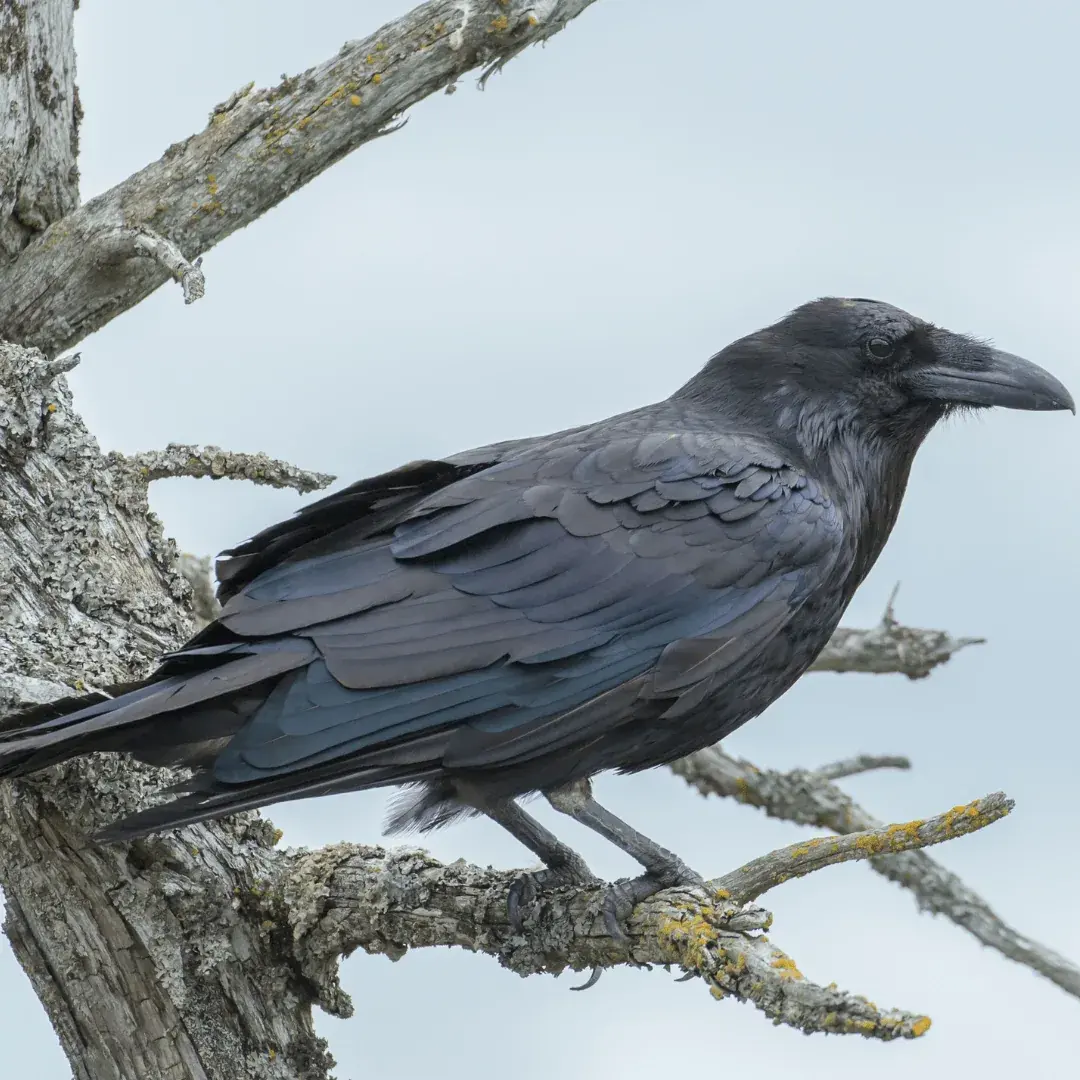 | 25” | Thick bill Thick neck with shaggy throat feathers Often seen in pairs or alone More common in Western states |
American Crow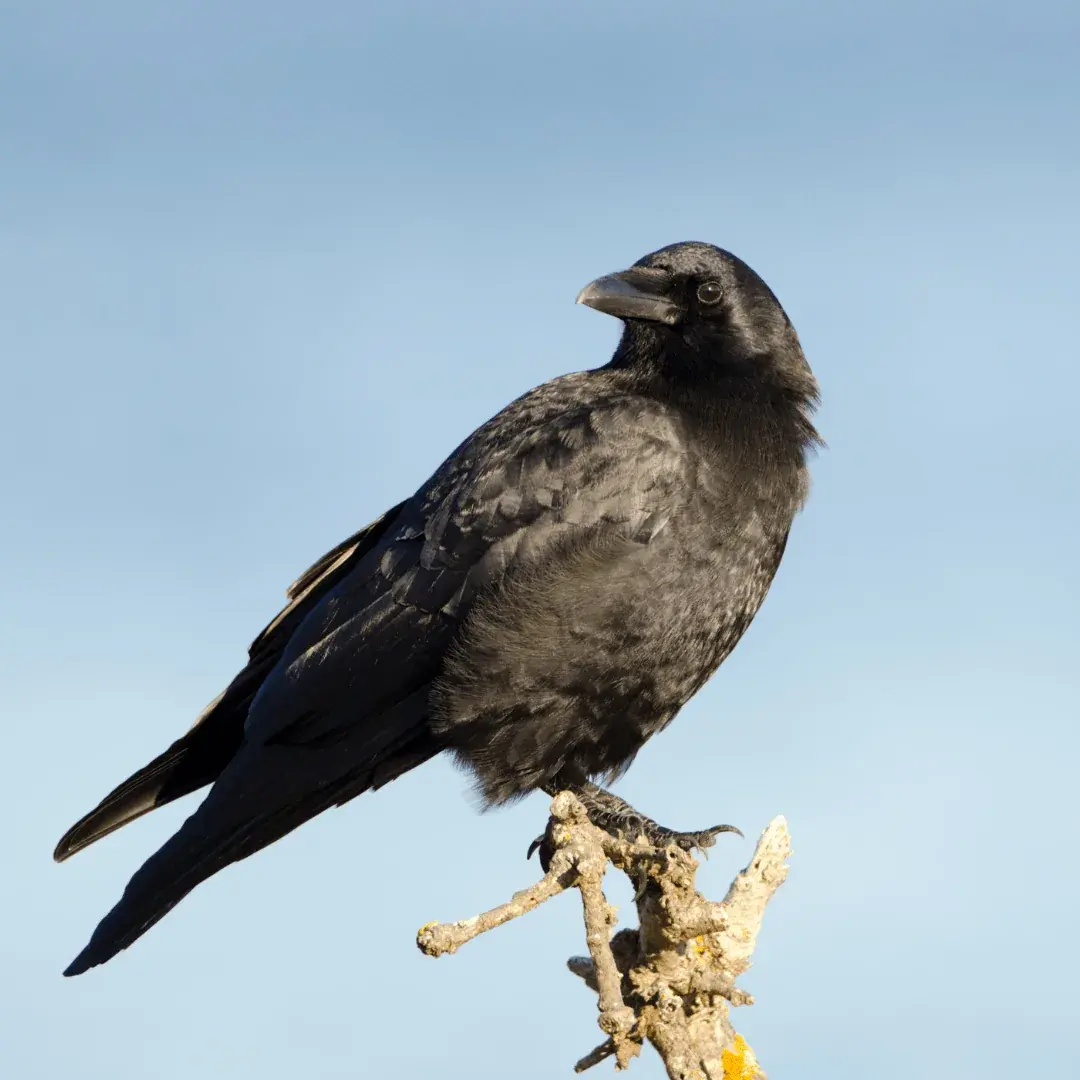 | 17.5” | Trademark “caw” sound Widespread and abundant throughout North America Comfortable around people Form large flocks |
Common Grackle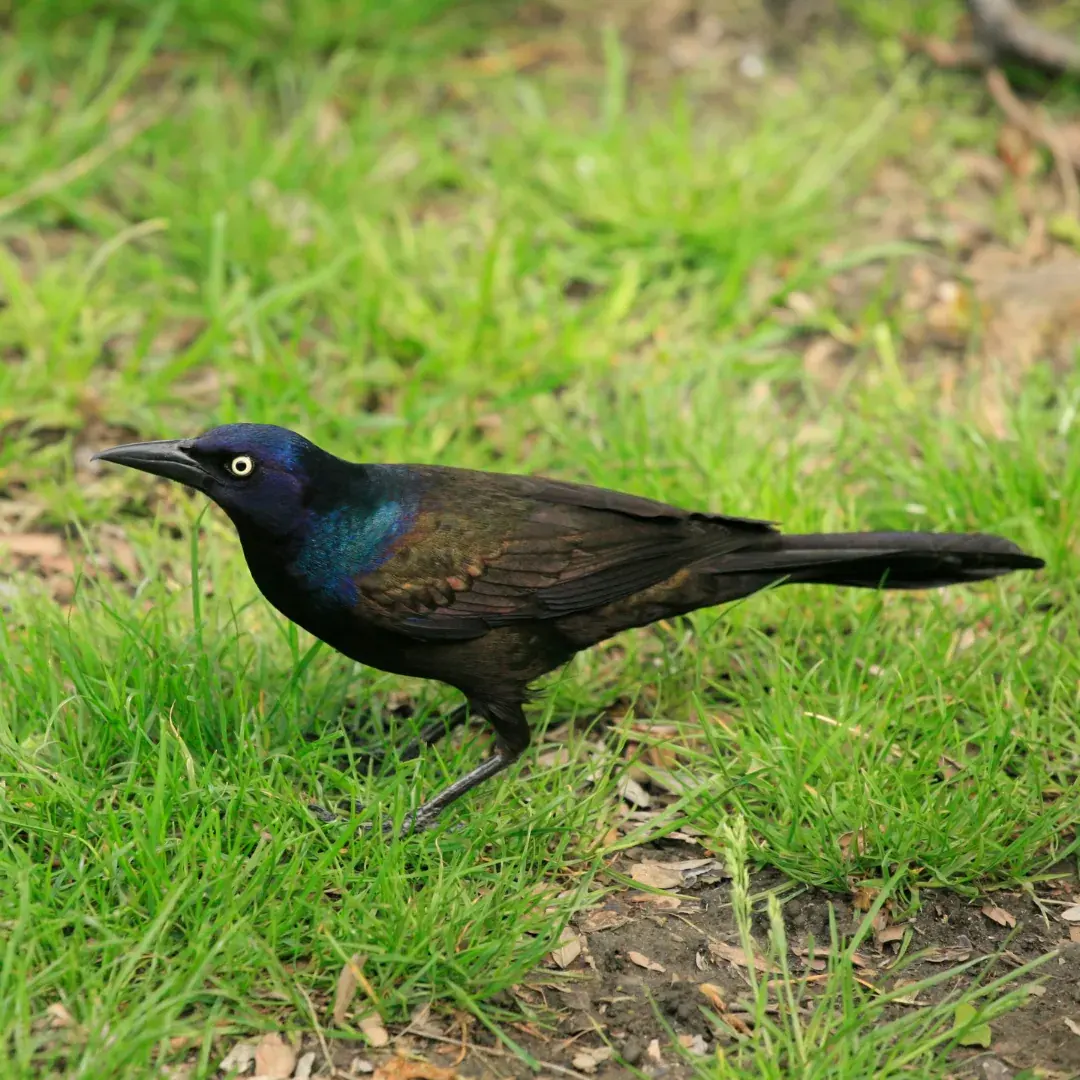 | 12” | Glossy, iridescent coloring May appear black, bluish, or bronze, depending on the individual and the lighting Shiny, blue-green head coloring |
Brewer’s Blackbird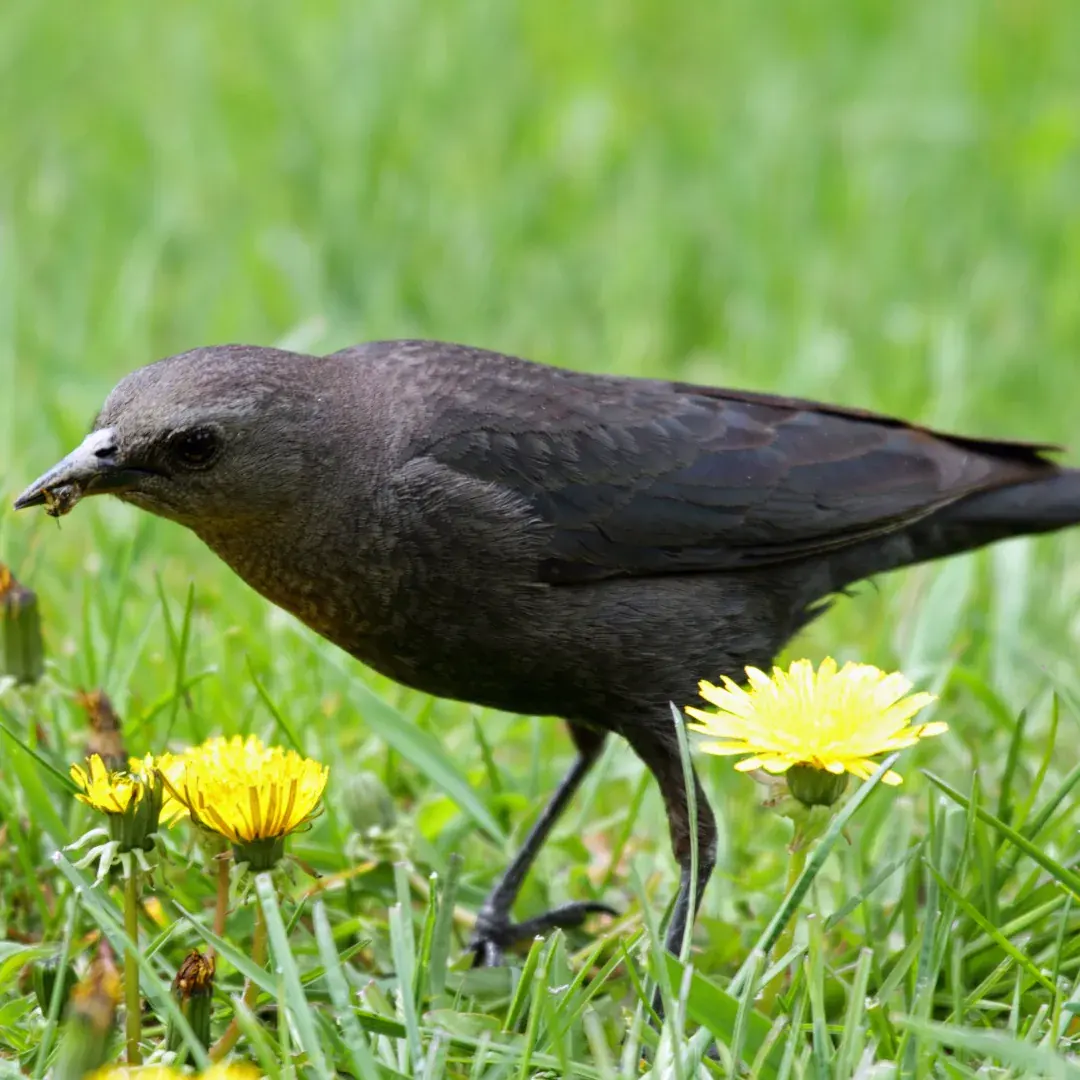 | 9” | Nearly pure black coloring, hints of green and blue Distinct yellow eyes and long legs Form large flocks that feed together on the ground More common in Western states |
European Starling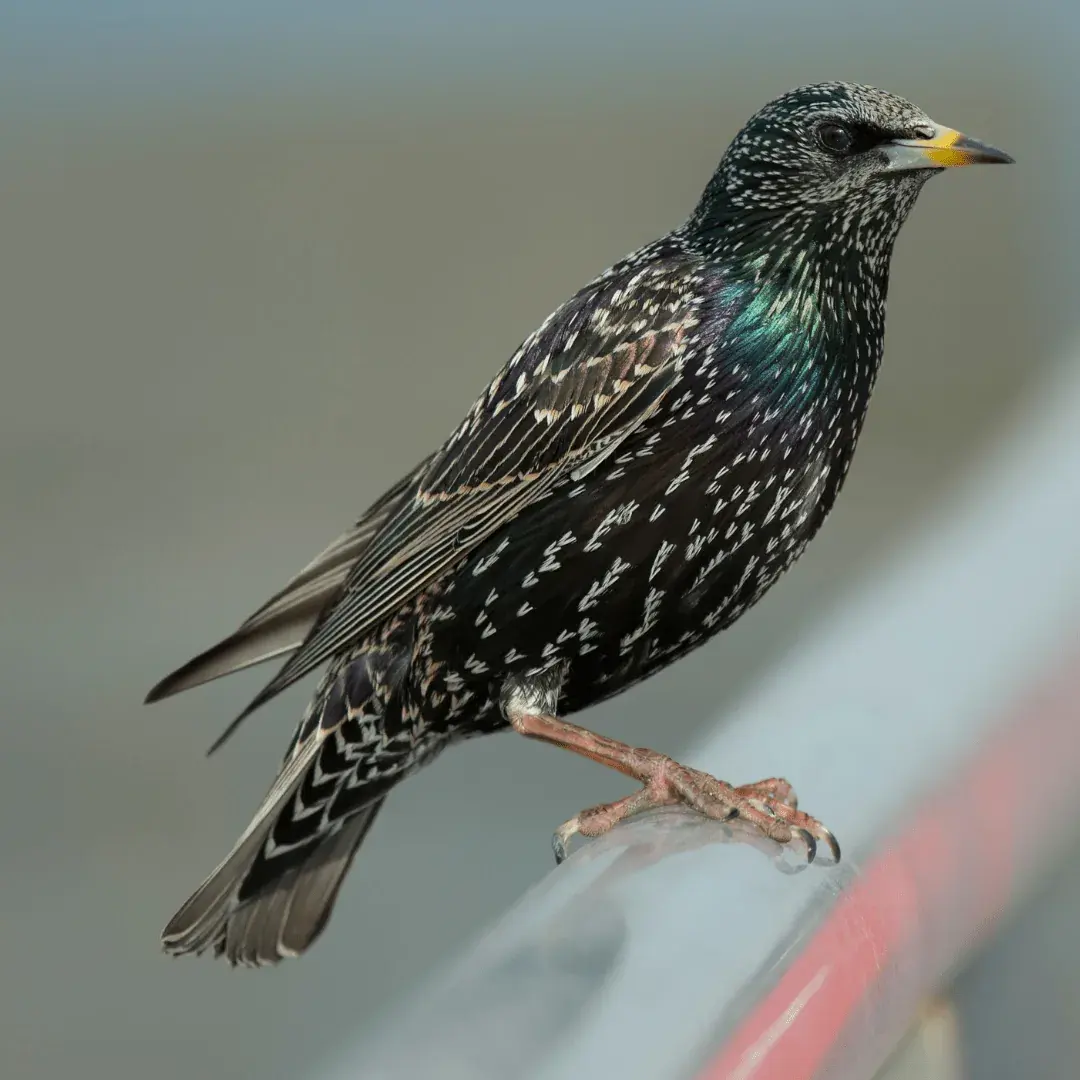 | 8.5” | Glossy coloring with shades of purple and green Covered in white spots during winter Form large flocks |
Brown-headed Cowbird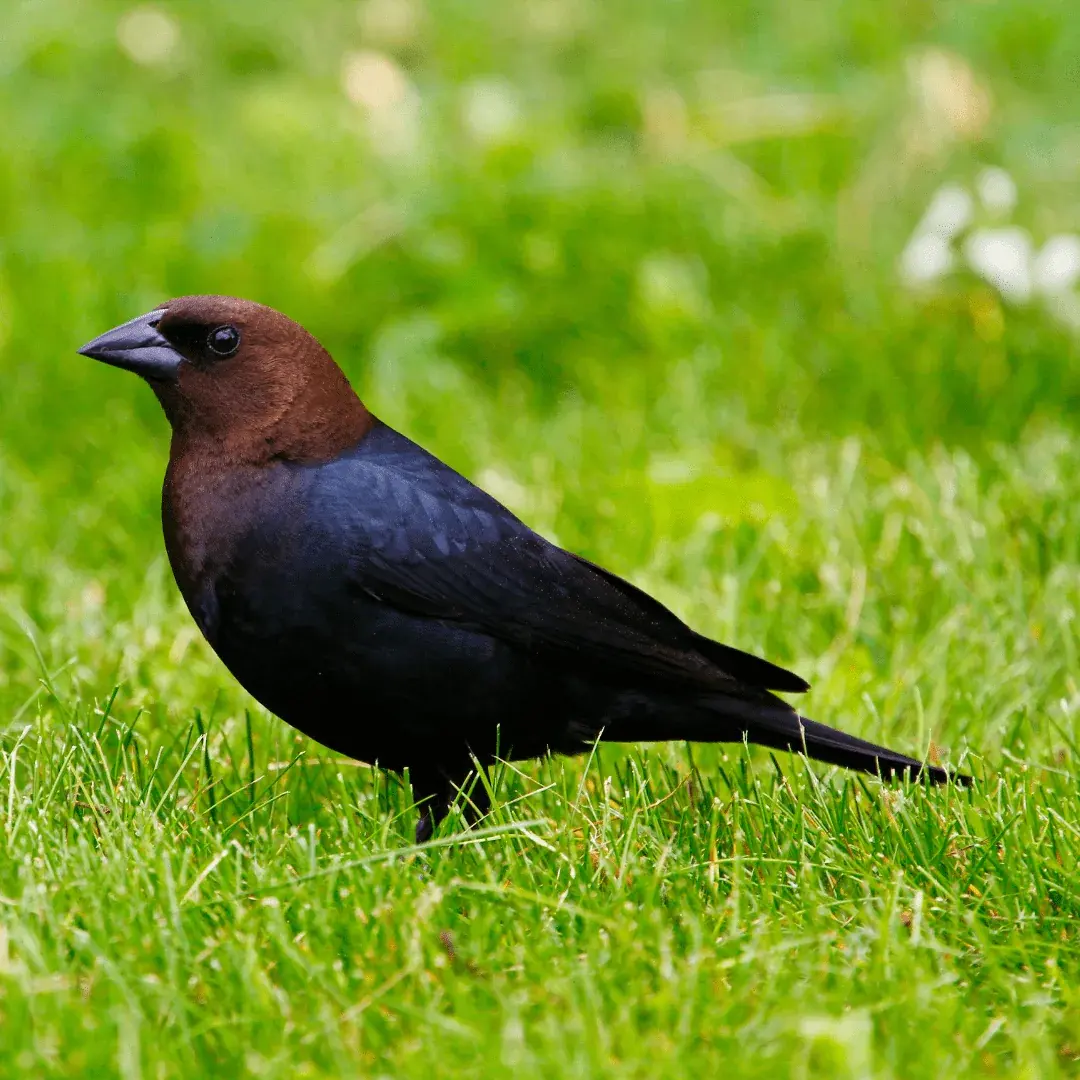 | 7.5” | Black body, brown head Shorter and thicker than most blackbird species Form large, mixed-species groups and feed on the ground |
Red-winged Blackbird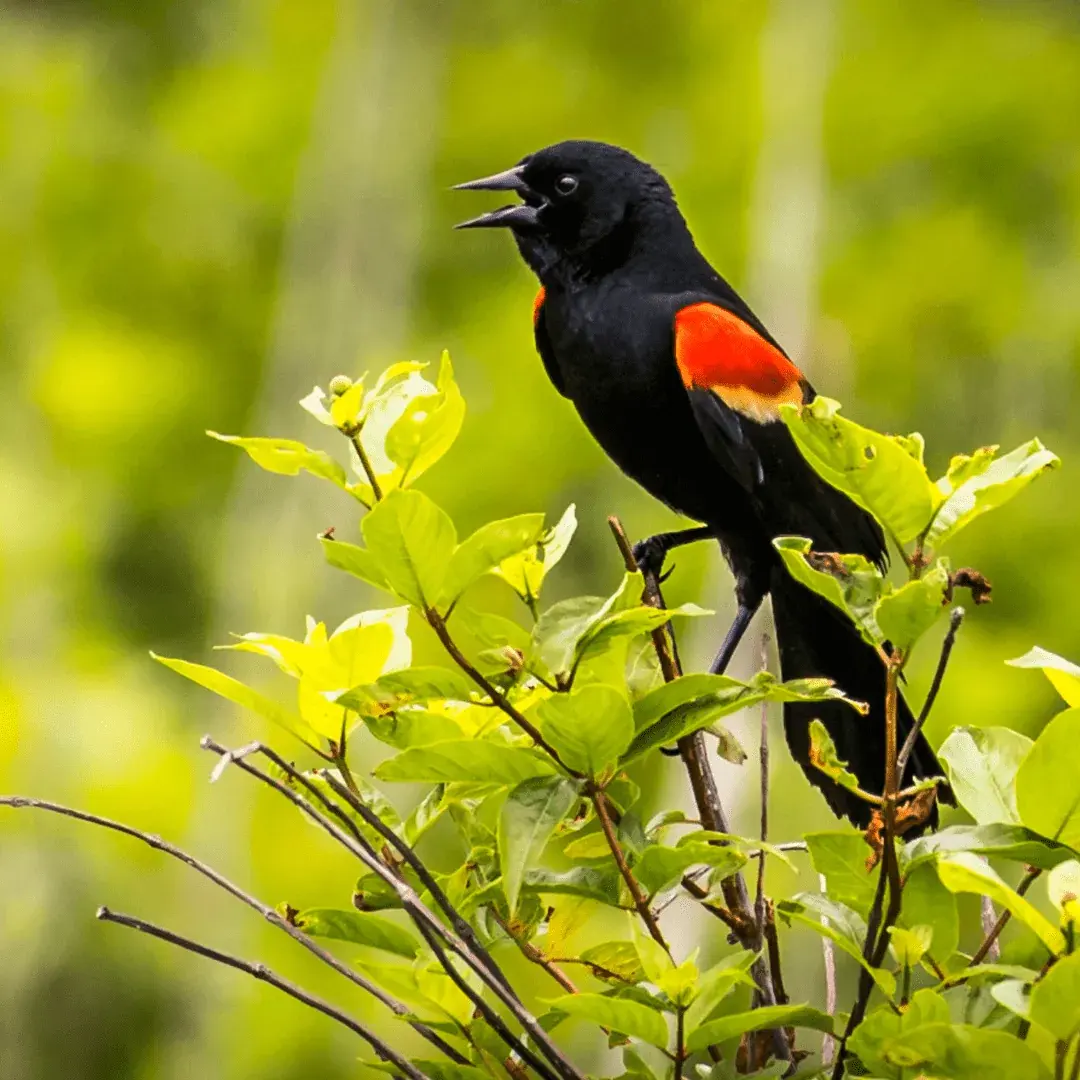 | 7.25” | Reddish-orange shoulder patch with yellow lower border Plain black coloring aside from shoulder patch Females are streaked brown and white, easily confused with sparrows |
Common Types of North American Black-Colored Birds
The most common black-colored bird species of North America include:
- Vultures: turkey vulture, black vulture
- Corvids: American Crow, common raven
- New World Blackbirds: red-winged blackbird, Brewer’s blackbird, common grackle, brown-headed cowbird
- Starlings: European starling
The list above isn’t comprehensive, but covers most of the species that you’re likely to see in abundance or in urban environments.
In this guide, we’re focusing on small and medium-sized birds. But first, a note on vultures: when you see a large, black bird circling high up in the sky, there’s a good chance that it’s a turkey vulture or a black vulture.
From a distance, it’s easy to confuse the appearance of vultures, crows, and ravens, but their flight styles are helpful for identification. Vultures spend more time soaring slowly at greater heights as they slowly search the landscape (using a keen sense of smell) for a carcass to feed on.
What to Look for When Identifying Birds
Birders use the following characteristics to identify species:
- Size and shape
- Color
- Sounds
- Behavior
- Habitat
Any one of the above categories can be useful in telling one species from another. For example, using size, you may learn to recognize that ravens are slightly bigger than crows. Or, using color, you may learn to quickly spot a brown-colored head and know that what you’re seeing is a brown-headed cowbird.
Males Vs Females and Mature Birds vs Juveniles
Identifying birds would be easier if every member of a species looked exactly the same. However, males and females sometimes look like entirely different species.
With ravens, crows, and starlings, males and females look nearly identical.
However, in general, male songbirds are more colorful than females. Of the black-colored birds discussed in this guide, this rule holds true for grackles, brewer’s blackbirds, cowbirds, and red-winged blackbirds. In these species, females tend to look more brownish and plain.
Along with gender confusion, it’s easy to be thrown for a loop by a young bird.
Birds that have left the nest but haven’t yet developed adult plumage are known as juveniles. Juveniles sometimes look odd and unfamiliar. Among black-colored birds, juveniles are often brown or gray, with color patterns that are streaky and undeveloped.
Crow Vs Raven
Crow
Raven
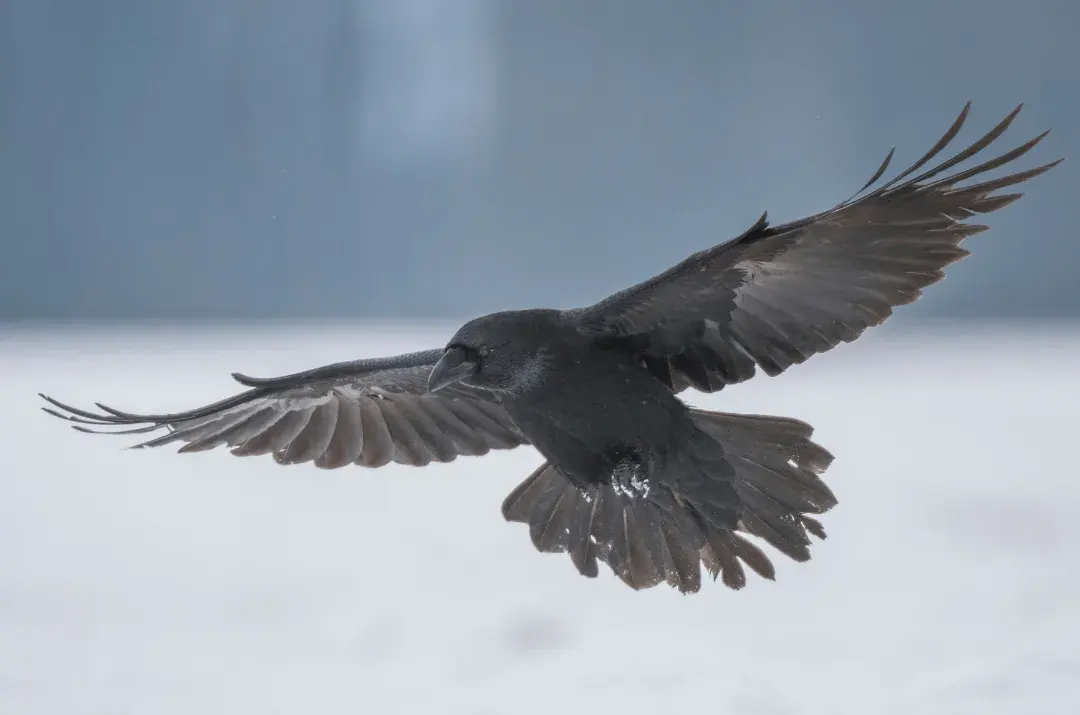
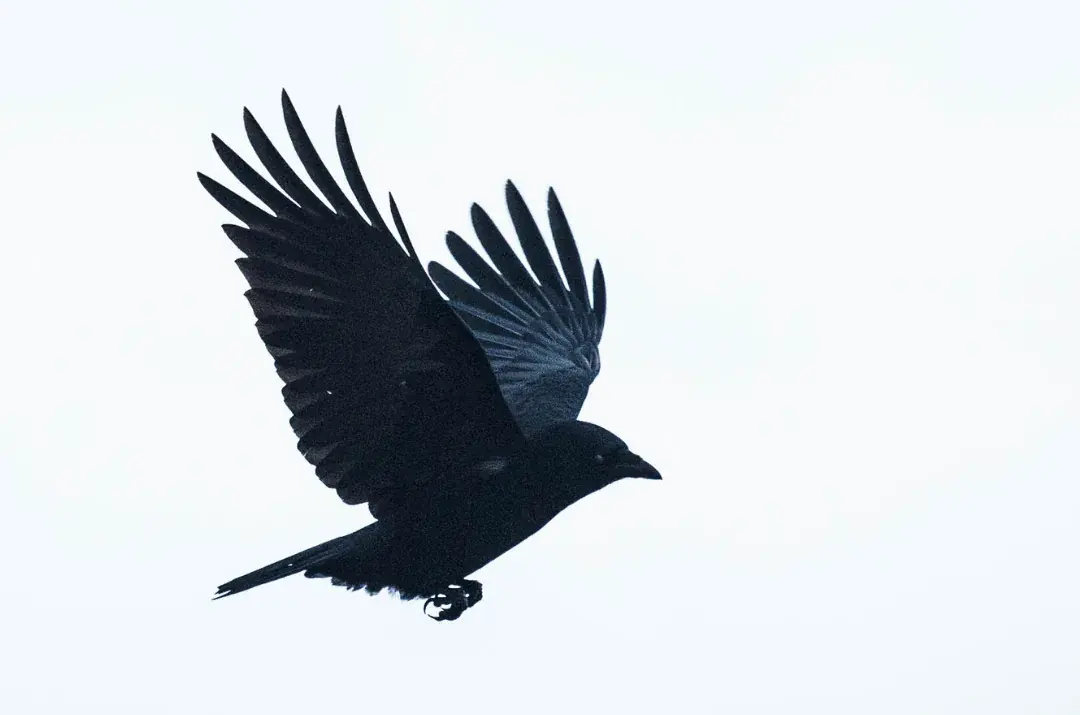
Is that a raven or a crow? At first glance, the two species seem nearly identical.
Here are a few tips for differentiating ravens and crows:
- Ravens are larger—as big as red-tailed hawks
- Raven bills are thicker and more curved
- Raven neck feathers are often scruffy and shaggy
- Ravens make low croaking sounds, crows make shrill cawing sounds
- Ravens are more likely to be seen solo or in pairs, crows are more likely to travel in groups
- In flight, ravens do more soaring, crows do more flapping
- Crows are more common in urban and suburban settings
Ravens and Crows Vs Smaller Black-Colored Birds
Compared to grackles, starlings, cowbirds, and blackbirds, ravens and crows are significantly larger. They’re longer and heftier.
Ravens and crows are also entirely black. One of the fastest ways to identify the other common black-colored birds is to look for the non-black colorings described above, such as the brown head of a cowbird.
If you find yourself stumped, remember that differences between males and females and juveniles vs adults are common sources of confusion.
To help progress your bird ID skills, create an iNaturalist account. On iNaturalist, you can upload wildlife photos and crowdsource the ID process. Or, download the Merlin bird app. Using the Merlin app, you answer a few questions about a bird and the app produces ID suggestions.
More on bird identification
Are Sparrows a Good Bird to Have in Your Yard?
Sparrows can be a welcome addition to a backyard, but not all species are equal. Native sparrows such as the Song Sparrow eat insects and add lively activity, while House Sparrows are invasive in North America and can push out Bluebirds and Wrens. This guide covers which species to expect, what the…
Bird Identification — , 8 min read

Blue Jays Birds: ID, Diet and Backyard Tips
Blue jays are among the most recognizable and most misunderstood backyard birds in North America. This guide covers how to identify them by their crest and black necklace, where they live from Canada to the southern United States, what they eat at feeders and in the wild, and how to attract them wi…
Bird Identification — , 8 min read

Bird Names That Start With Q: A Backyard Guide
Wondering about bird names that start with q? This guide covers the most common North American quail, how to identify them by sight and sound, and practical steps to attract them to your backyard this week.
Bird Identification — , 5 min read